
- October 7, 2026
- Posted by: vitalclick
- Category: Property & Real Estate
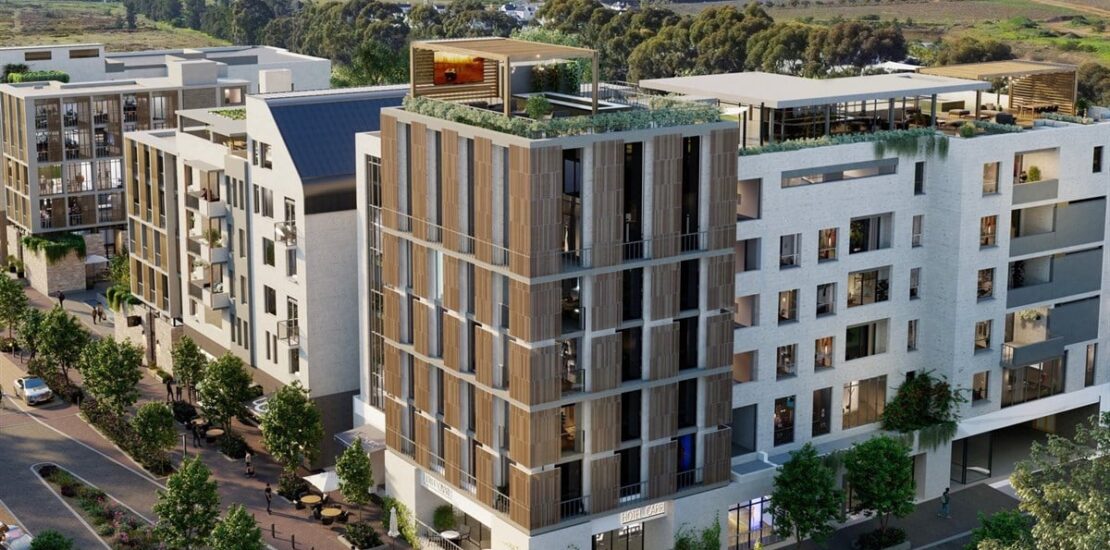
An Edge Advanced two-bedroom apartment could save around R600 a month on utilities, with a much bigger payoff if the owner keeps putting the saving into the bond.
Devonbosch
A two-bedroom Edge Advanced apartment could save its owner around R600 a month on electricity and water at current Cape Town tariffs. Put that saving back into the bond every month and the financial benefit becomes considerably larger. On a R1.85m apartment financed with a 10% deposit over 20 years, Landsdowne’s modelling shows the bond could be settled almost four years early, saving around R587,000 in interest under current rate assumptions.
“The term ‘green’ has become very loose in residential property,” says Jonathan Kohler, CEO of Landsdowne Property Group. “A solar panel, inverter or water tank does not on its own tell a buyer what the home will cost to run. Certification gives buyers something more useful because the efficiency is measured against a defined benchmark.”

Jonathan Kohler, Landsdowne Property Group CEO
Under the International Finance Corporation’s Edge certification standard, Edge Certified requires at least 20% predicted savings in energy, water and embodied energy in materials against a local base-case building. Edge Advanced raises the energy requirement to at least 40%, while the minimum water and embodied-energy savings remain at 20%. Certification is independently audited against that base case.
A 2025 peer-reviewed South African study published in the Journal of Sustainable Real Estate examined 503 Edge certified apartments. It used 349.06kWh a month as the conventional benchmark for a two-bedroom apartment and found that the Edge two-bedroom units used 126.29kWh less each month, a real-world reduction of about 36%.
For this exercise, Landsdowne applied Edge Advanced’s higher 40% energy threshold to the study’s conventional two-bedroom benchmark. That produces an illustrative electricity saving of about 140kWh a month.
At the documents/Budget-2026-27_Ann06-25-ElectricityGenerationandDistribution-ConsumptionandGeneration.pdf City of Cape Town’s 2026/27 Home User tariff of R3.5595/kWh for the first 600kWh, that is worth close to R500 a month. The Water Research Commission estimates indoor water use for a two-person household with a full house connection at 198 litres per person per day. Applying Edge’s 20% water-saving threshold and current Cape Town tariffs takes the modelled combined saving to about R600 a month. Using the same approach with the City of Johannesburg’s 2026/27 tariffs produces a saving of about R560 a month.
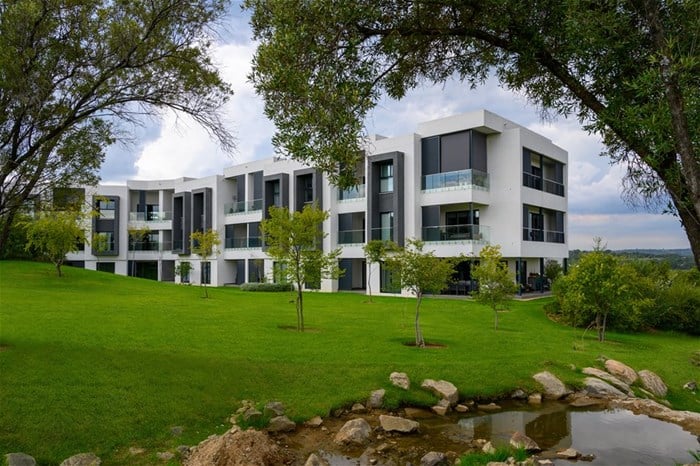
Steyn City
Buying off plan adds to the saving
Where VAT applies to a sale by a VAT-registered developer, transfer duty generally does not apply. SARS currently charges no transfer duty up to R1.21m, with progressive rates above that. On a R1.85m conventional purchase, transfer duty would be R24,786. At R1.49m it would be R8,400. The current transfer-duty table provides the applicable bands.
Qualifying Edge purchases can also attract cheaper home-loan funding. Absa’s Eco Home Loan currently offers a 0.25 percentage-point interest-rate concession on qualifying homes bought directly from approved Edge-certified developments and excludes ordinary owner-to-owner resales. Africa/PDF/Terms and Conditions/SBSA_Green_Home_Loan_terms_and_conditions.pdf Standard Bank’s Green Home Loan advertises the same 0.25 percentage-point concession on qualifying properties in approved Edge developments. Both banks also offer potential rebates, which have been excluded from this calculation.
Nedbank’s current interest-rate table puts prime at 10.75%, effective 25 September 2026. A qualifying 0.25 percentage-point green concession would reduce a prime-linked rate to 10.50%. On a 90% bond over 20 years, the monthly saving is about R281 on R1.85m and R226 on R1.49m. Actual pricing depends on the borrower and lender.
What the numbers look like
| Claremont | Bryanston | ||
| Model purchase price | R1.85m | R1.49m | |
| Monthly utility saving | ~R600 | ~R560 | |
| Monthly green home-loan saving | ~R281 | ~R226 | |
| Total monthly saving | ~R881 | ~R786 | |
| Transfer duty avoided upfront | R24,79 | R8,40 | |
| Estimated first-year saving | ~R35,400 | ~R17,800 | |
| Bond settled earlier if savings are paid in | 3 years 7 months | 3 years 5 months | |
| Estimated interest saved on the bond | ~R587,000 | ~R445,000 | |
*Landsdowne calculations based on published consumption benchmarks, current municipal tariffs, a 10% deposit, 20-year bond and a 0.25 percentage-point qualifying green home-loan concession. The illustration uses 10.75% as the conventional rate and 10.50% after the concession. Actual pricing varies by borrower and lender. Levies and municipal rates are assumed to be the same; utility tariffs and interest rates are held constant.
The monthly saving is useful, but the real gamechanger is when it’s reinvested back into the bond.
On the R1.85m Cape Town example, the buyer starts by putting the R24,786 transfer-duty saving into the bond. The roughly R881 saved each month on utilities and the qualifying green home-loan rate is then added to the normal repayment. On those assumptions, the 20-year bond is settled in around 16 years and five months, cutting three years and seven months from the repayment term and reducing total interest by approximately R587,000.
The Johannesburg example produces a similar result. At the R1.49m price point, the bond is settled about three years and five months early, with approximately R445,000 less interest paid.
The model assumes the same levies and municipal rates for the conventional and Edge Advanced apartments and holds today’s utility tariffs and interest-rate assumptions constant. Actual consumption, tariffs and home-loan pricing will vary.
“The practical value of a greener apartment is that an owner does not necessarily have to change the way they live to make the saving work harder,” Kohler says.
“If that saving simply goes back into the bond every month, a relatively small reduction in household running costs can ultimately take several years off the repayment period.”
At the Cape Town price point used here, that means almost four years without a bond and more than half a million rand that does not go to the bank in interest.