
- August 20, 2026
- Posted by: vitalclick
- Category: Property & Real Estate
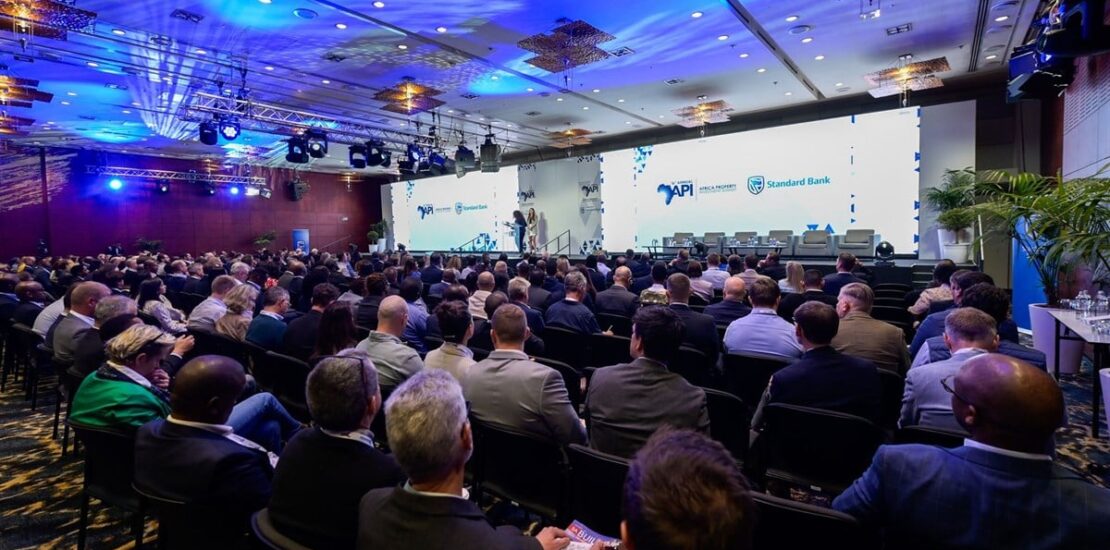
While banks, DFIs and private equity are funding hotels and lodges across the continent, realising Africa’s full hotel development pipeline will require an estimated $10bn of new development investment per year. And closing the gap between a funded deal and an operating property remains a pressing challenge. Solutions to these barriers, along with other pertinent topics, will be central to the leadership conversations taking at the 17th Annual Africa Property Investment (API) Summit in Cape Town on 17 and 18 September.
Africa’s hotel development pipeline sits at over 100,000 rooms across almost 700 hotels and resorts, but securing enough capital – and closing the timeframe between funding and delivery on the ground – remain the critical barriers for the sector to reach its full potential.
“Africa’s hospitality sector continues to attract significant investor interest. The challenge is turning investment into successful projects on the ground. The developments that succeed are those where the operational vision is clearly understood from the outset and supported by robust planning, informed cost and programme assumptions, and the right delivery expertise. Getting these fundamentals right helps create greater certainty, more predictable outcomes and enables projects to move successfully from concept to operation,” highlights Tim White, regional managing director – Africa, at Turner & Townsend.

Tim White, regional managing director Africa, Turner & Townsend
The strides being made by major hotel groups and tourism hotspots in converting funding into progress on the ground, will be a key focus of the API Hospitality and Residences Forum, taking place on Day 1 of the API Summit at the Cape Town International Convention Centre.
“On paper, Africa has an impressive hotel pipeline. Each year brings new openings that demonstrate what the sector can deliver, yet the headline figures tend to blur the reality of what will actually materialise,” says Wayne Godwin, managing director, Cushman & Wakefield | Broll Hospitality.

Wayne Godwin, managing director, Cushman & Wakefield Broll Hospitality
Realising the full pipeline would require an estimated $10bn a year in new development investment, according to Godwin, who highlights that capital isn’t the only constraint.
“A shortage of the right technical skills within development teams means we realise only a small portion of this pipeline. On its own this is not a material problem as Africa still delivers in a healthy volume of new supply each year. The bigger issue is that the sector receives a significant amount of capital that is not optimally deployed, much of it going into deferred or abandoned developments, or into the wrong developments altogether.”
He says, however, that the sector – and the capital allocation channelled into it – is maturing.
“Capital is becoming more opportunistic, recognising that acquisitions are often priced below replacement cost and can avoid development risk. All while still recognising that a well-positioned, well-scaled development with the right development management team on board remains a strong prospect.”
As summarised by Lee-Anne Singer, partner, Southern Africa at HVS Middle East and Africa:
“It’s not the funded pipeline that decides who wins the next decade, it’s who can actually convert opportunity into delivery on the ground. That’s the harder conversation; it’s the one this room needs to keep having; and the one which API Summit allows to take place.”
Agenda highlights
The API Hospitality & Residences Forum’s opening panel highlights the momentum that has been built across the continent, including the latest regulatory, investment, ease of access and demand drivers that are facilitating development in key tourism and hospitality hotspots. This in line with the conference’s overarching theme of Bold Capital. Real Momentum.
The forum additionally explores the growing confidence of DFIs and banks in funding hotels, and how African state priorities can be better aligned with private tourism and hospitality interests to accelerate development.
Africa’s rapidly growing luxury residential and hospitality scene will lead trends-based discussions at the conference, along with a spotlight on the next era of eco-tourism and community-focused hospitality.
The programme is rounded out by case studies that showcase the deal-structuring and operational mechanics behind some of Africa’s flagship hotel projects.
The API Hospitality and Residences Forum is headlined and supported by some of the continent’s leading hospitality and real estate brands and eco-tourism trailblazers, including:
– Radisson Hotel Group
– Marriott International
– HTI Consulting
– Aleph Hospitality
– Tui Hotels & Resorts
– City Blue
– Wyndham
– Valor Hospitality
– Hyatt
– HVS Middle East & Africa
– Banyan Group
– Natural Selection
– Liyongo