
- June 22, 2026
- Posted by: vitalclick
- Category: Investments
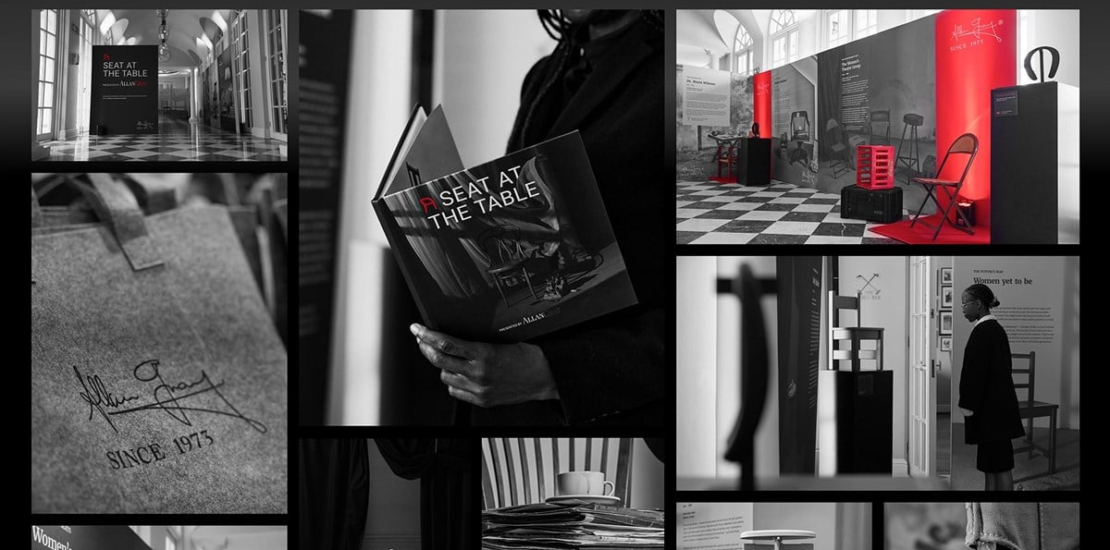
Allan Gray and Accenture Song’s A Seat at the Table was the only South African campaign to win a D&AD Pencil in 2026, earning a Wood Pencil in the Spatial Design category.
This was the only work from South Africa to be recognises. Source: Supplied.
South African history
Created as a Women’s Day experience, the campaign featured a series of chairs representing different eras in South African history, each linked to a woman whose work helped shape the country’s social, political and economic landscape. Drawing on the legacy of figures such as the women who marched to the Union Buildings in 1956, the installation used the symbolism of the seat to honour women who challenged exclusion and expanded opportunity for those who followed.
According to Zwelethu Nkosi, group head of marketing at Allan Gray, the campaign was also shaped by the legacy of the late Gill Gray, Allan Gray’s wife and co-partner in their philanthropic work, whose influence informed the spirit of the project.
She says the seat quickly emerged as the central narrative device during development.
A seat is something people understand immediately. It can hold memory, status, power, work, protest, creativity and possibility. That made it the right object through which to tell these women’s stories – Zwelethu Nkosi
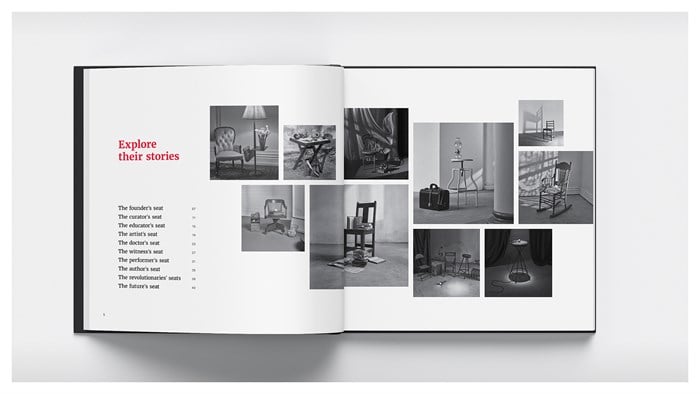
The project also released a commemorative book to celebrate the women. Source: Supplied.
She adds that the concept naturally evolved into a spatial experience, where the seat functioned as object, symbol and storytelling device. “Rather than asking people to simply read or watch the stories, the installation allowed guests to move through them, spend time with them and, through binaural audio, be placed more directly into moments from the lives of the women being honoured.”
The selection process focused on women whose influence extended across disciplines and generations, reflecting how their “seats” were used to drive change and inspire others in turn. Nkosi says the intention was to create a body of work that captured the breadth of South African women’s contribution, spanning education, activism, medicine, culture, art and beyond.

A key consideration, she explains, was whether each story reflected a broader sense of potential. The women who had taken their seats, often quietly and without recognition, and used them to build, lead, create and drive change. The aim was also to inspire women today not only to claim a seat at the table, but to feel empowered to take any seat at any table.
“It was familiar enough to be immediately understood, but rich enough to carry different meanings depending on who had occupied it,” Nkosi says. “In one story, a seat could represent education; in another, creativity, resistance, care, leadership or opportunity. This gave us a simple but flexible design system through which every story could be expressed while still feeling part of one coherent experience.”
Intention being recognised
She adds that the physical and photographed seats formed the initial visual entry point, while writing, spatial design and binaural audio deepened the experience—shifting it from observation to immersion, and bringing audiences closer to the lives, choices and sacrifices behind each story.
For Nkosi and the Accenture Song team, the D&AD recognition affirms the intention behind the work. “It showed how a simple, universally understood object could carry history, identity, sacrifice, progress and possibility. It also made South African women’s stories feel personal, immediate and emotionally resonant,” she says.
She adds that the judges likely responded to the clarity of the idea, its cultural and historical relevance, and the craft across every touchpoint: from research and curation to writing, photography, binaural audio, styling, production and the commemorative book.
“Most importantly, the work had substance. It was rooted in a real client brief, shaped through true collaboration, and created with the care needed to honour the women at the heart of it—and to inspire future generations of women not yet born.”